Have you ever noticed a little blood in the sink after brushing your teeth? You might think it’s nothing serious, especially if your gums don’t hurt. However, bleeding gums when brushing can be an early warning sign that your gums need attention.
While occasional bleeding may happen because of brushing too aggressively or starting a new flossing routine, frequent gum bleeding should never be ignored.
Understanding why your gums bleed, recognizing the warning signs of gum disease, and knowing when to visit a dentist can help you protect your oral health.
Is It Normal for Your Gums to Bleed When Brushing?
Healthy gums generally should not bleed during regular brushing or flossing.
If you notice occasional bleeding, it doesn’t automatically mean you have a serious dental problem. However, it may indicate irritation or inflammation that deserves attention.
Some common situations that can cause temporary bleeding include:
- Brushing too hard or using a firm-bristled toothbrush.
- Flossing too aggressively.
- Starting or restarting a flossing routine after a long break.
- Temporary gum sensitivity associated with hormonal changes.
According to the American Dental Association (ADA), some people may experience minor bleeding when they first begin flossing regularly. This usually improves within about a week.
However, if your gums bleed frequently, continue bleeding despite gentle oral care, or become swollen and painful, schedule a dental evaluation.
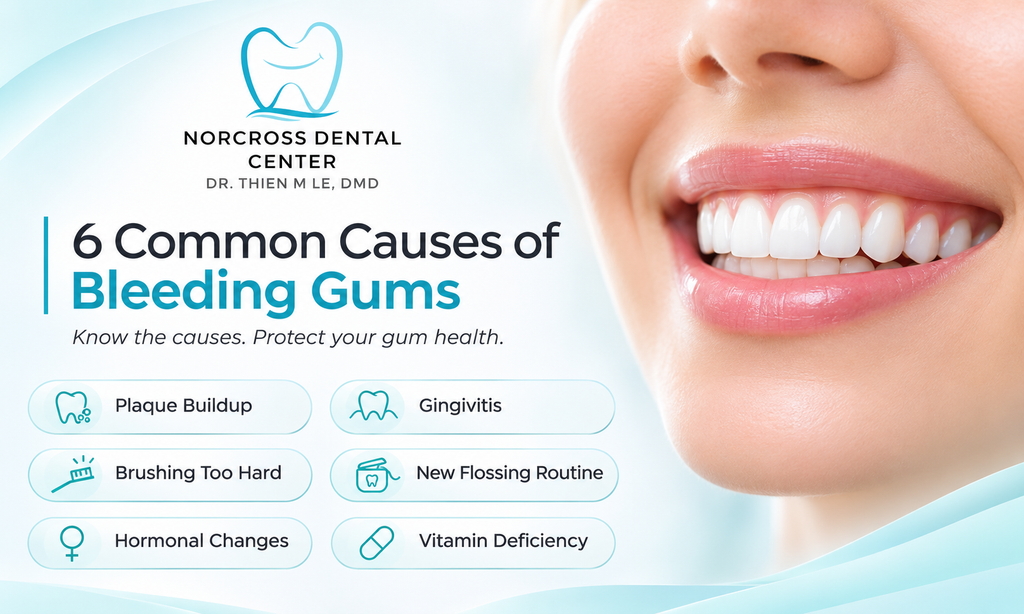
6 Common Causes of Bleeding Gums
There are several possible reasons why your gums bleed when brushing your teeth.
1. Gingivitis: The Early Stage of Gum Disease
One of the most common causes of bleeding gums is gingivitis.
Gingivitis develops when plaque, a sticky film of bacteria, accumulates along the gumline and causes inflammation.
Common signs include:
- Red or swollen gums.
- Bleeding during brushing or flossing.
- Tender or irritated gum tissue.
- Persistent bad breath.
The good news is that gingivitis is generally reversible with proper oral hygiene and professional dental care.
Without appropriate treatment, however, gum inflammation may progress to a more serious form of periodontal disease.
2. Brushing Your Teeth Too Hard
Brushing harder doesn’t necessarily make your teeth cleaner.
Aggressive brushing can irritate delicate gum tissue and contribute to gum recession over time.
To reduce irritation:
- Use a soft-bristled toothbrush.
- Brush gently with short, controlled movements.
- Avoid scrubbing your teeth with excessive pressure.
- Ask your dentist to demonstrate proper brushing techniques.
A gentle brushing routine can help clean your teeth effectively without unnecessarily irritating your gums.
3. Inconsistent or Improper Flossing
Flossing helps remove plaque and food particles from areas your toothbrush cannot easily reach.
If you haven’t flossed regularly, your gums may bleed when you start again.
However, snapping floss forcefully against your gums can also cause irritation.
When flossing, gently guide the floss between your teeth and curve it around each tooth to clean along the sides.
If bleeding continues despite gentle, consistent cleaning, consult your dentist.
4. Periodontitis: Advanced Gum Disease
If gingivitis is left untreated, it may progress to periodontitis.
Unlike gingivitis, periodontitis affects the deeper tissues and bone supporting your teeth.
Warning signs may include:
- Persistent gum bleeding.
- Receding gums.
- Loose or shifting teeth.
- Persistent bad breath.
- Discomfort when chewing.
- Changes in how your teeth fit together.
Periodontitis can result in permanent damage to the supporting structures of your teeth.
Although this damage cannot always be reversed, professional periodontal treatment can help manage the condition and slow its progression.
5. Hormonal Changes During Pregnancy
Hormonal changes during pregnancy can increase the sensitivity of gum tissue to plaque.
Some pregnant patients develop pregnancy gingivitis, which may cause redness, swelling, tenderness, or bleeding during brushing.
Maintaining good oral hygiene and continuing routine dental care during pregnancy are important.
If you experience persistent bleeding or gum discomfort while pregnant, inform your dentist.
6. Certain Medications and Health Conditions
Some medications and medical conditions can contribute to gum bleeding.
For example:
- Blood-thinning medications may make bleeding more noticeable or harder to stop.
- Diabetes can increase the risk of gum disease.
- Certain medications may affect gum tissue or oral health.
If you experience unexplained or persistent gum bleeding, let your dentist know about your medical history and medications.
Never stop taking prescribed medication without speaking with your healthcare provider.
Early Signs of Gum Disease You Shouldn’t Ignore
Bleeding gums are not always the only symptom of gum disease.
Pay attention to other changes in your mouth, including:
- Red or swollen gums: Healthy gums should not remain persistently inflamed.
- Persistent bad breath: Ongoing bad breath may indicate plaque buildup or gum disease.
- Gum recession: Gums pulling away from the teeth may expose more of the tooth surface.
- Tooth sensitivity: Exposed roots or other dental conditions may increase sensitivity.
- Loose teeth: Changes in tooth stability may suggest damage to supporting tissues.
One important fact to remember is that gum disease can develop without significant pain.
Regular dental examinations are essential because your dentist may identify early changes before you notice obvious symptoms.
How to Help Prevent Bleeding Gums
The best approach depends on the underlying cause. However, maintaining healthy daily habits can help prevent plaque buildup and reduce the risk of gum inflammation.
Brush Twice a Day With Fluoride Toothpaste
Brush your teeth for two minutes, twice daily, using a soft-bristled toothbrush and fluoride toothpaste.
Pay special attention to the gumline without applying excessive pressure.
Clean Between Your Teeth Daily
Floss or use another dentist-recommended interdental cleaning tool once a day.
Cleaning between your teeth helps remove plaque from areas that brushing alone cannot reach.
Schedule Regular Dental Checkups
Even with good brushing and flossing habits, plaque can harden into tartar that requires professional removal.
Regular dental appointments allow your dentist to examine your gums, assess your oral health, and recommend appropriate preventive care.
Avoid Tobacco Products
Smoking and other tobacco use increase the risk of gum disease and can interfere with healing.
Avoiding tobacco supports healthier gums and improves overall oral health.
Maintain Healthy Daily Habits
A balanced diet, appropriate dental care, and management of existing health conditions can all support your oral health.
If you have diabetes or another condition associated with gum disease, discuss your individual dental care needs with your healthcare team.
When Should You See a Dentist for Bleeding Gums?
Occasional minor bleeding may result from temporary irritation, but recurring bleeding deserves professional attention.
Schedule a dental appointment if you notice:
- Bleeding almost every time you brush or floss.
- Bleeding that continues despite gentle, consistent oral hygiene.
- Red, swollen, or tender gums.
- Persistent bad breath.
- Receding gums or increased tooth sensitivity.
- Changes in your teeth or the way you bite.
Seek prompt dental attention if you experience severe gum swelling, significant pain, or a loose adult tooth.
If you have heavy bleeding that will not stop, seek emergency medical care.
A dentist can examine your gums, identify possible causes, and recommend treatment based on your needs.
How Do Dentists Treat Bleeding Gums?
Treatment depends on what is causing the bleeding.
During your dental examination, your dentist may:
- Examine your teeth and gums for signs of inflammation.
- Assess plaque and tartar buildup.
- Measure the spaces between your teeth and gums to check for signs of periodontal disease.
- Recommend dental X-rays when clinically necessary.
- Discuss appropriate treatment and home-care recommendations.
For mild gingivitis, a professional cleaning combined with improved daily oral hygiene may be sufficient.
Patients with more advanced periodontal disease may require additional treatment, such as scaling and root planing, sometimes called deep cleaning.
Your dentist will determine which approach is appropriate based on your oral health.
Frequently Asked Questions About Bleeding Gums
Why do my gums bleed every time I brush?
Frequent gum bleeding may result from gingivitis, plaque buildup, aggressive brushing, or other oral health concerns. Because repeated bleeding can indicate gum disease, a dental evaluation is recommended.
Can bleeding gums heal on their own?
Minor irritation may improve with gentler brushing or better flossing techniques. Early gingivitis is also reversible with proper care, which may include a professional cleaning. Persistent bleeding should be evaluated rather than ignored.
Should I stop brushing if my gums bleed?
Generally, no. Continue brushing gently with a soft-bristled toothbrush and maintaining daily interdental cleaning. Avoid aggressive techniques and contact your dentist if bleeding persists.
Are bleeding gums always a sign of gum disease?
No. Bleeding can also occur because of brushing too hard, changes in flossing habits, hormonal changes, medications, or certain medical conditions. A dental professional can help identify the cause.
Can gum disease cause tooth loss?
Yes. Advanced periodontal disease can damage the tissues and bone supporting your teeth, potentially leading to tooth loss. Early diagnosis and professional treatment can help protect your oral health.
Protect Your Gums With Preventive Dental Care
Bleeding gums may seem like a small concern, but they can be an important sign of changes in your oral health.
The good news is that many causes of gum bleeding can be addressed with appropriate dental care, improved oral hygiene, and early treatment.
Don’t wait for discomfort to become a bigger problem.
If you’ve noticed bleeding gums when brushing or flossing, our dental team is here to help you understand what’s happening and explore the care you may need.
Schedule a dental appointment today and take a positive step toward healthier gums and a healthier smile.
Sources and Medical References
- American Dental Association — Bleeding Gums
- National Institute of Dental and Craniofacial Research — Periodontal (Gum) Disease
- Centers for Disease Control and Prevention — About Periodontal Disease
Medical disclaimer: This article is intended for educational purposes only and does not replace professional dental diagnosis, treatment, or individualized medical advice.